
Christopher Wilson is the APAC Local Partner at The Landbanking Group in Munich, one of Morphosis's partners on the China Nature Markets project, alongside the Beijing-based Institute of Finance and Sustainability (IFS) and in association with the Asian Infrastructure Investment Bank (AIIB). The project examines whether a market mechanism can complement existing efforts to ecological protection in China. Read more about the project here
In this piece, Christopher argues that nature is productive infrastructure and should be understood as capital in its own right, and that what is missing is not more financial instruments but a shared evidence layer that lets those instruments attach to verified ecological production. Until that layer exists, the water regulation, flood protection and soil health that a climate-disrupted world depends on will remain unpriced and underfunded.
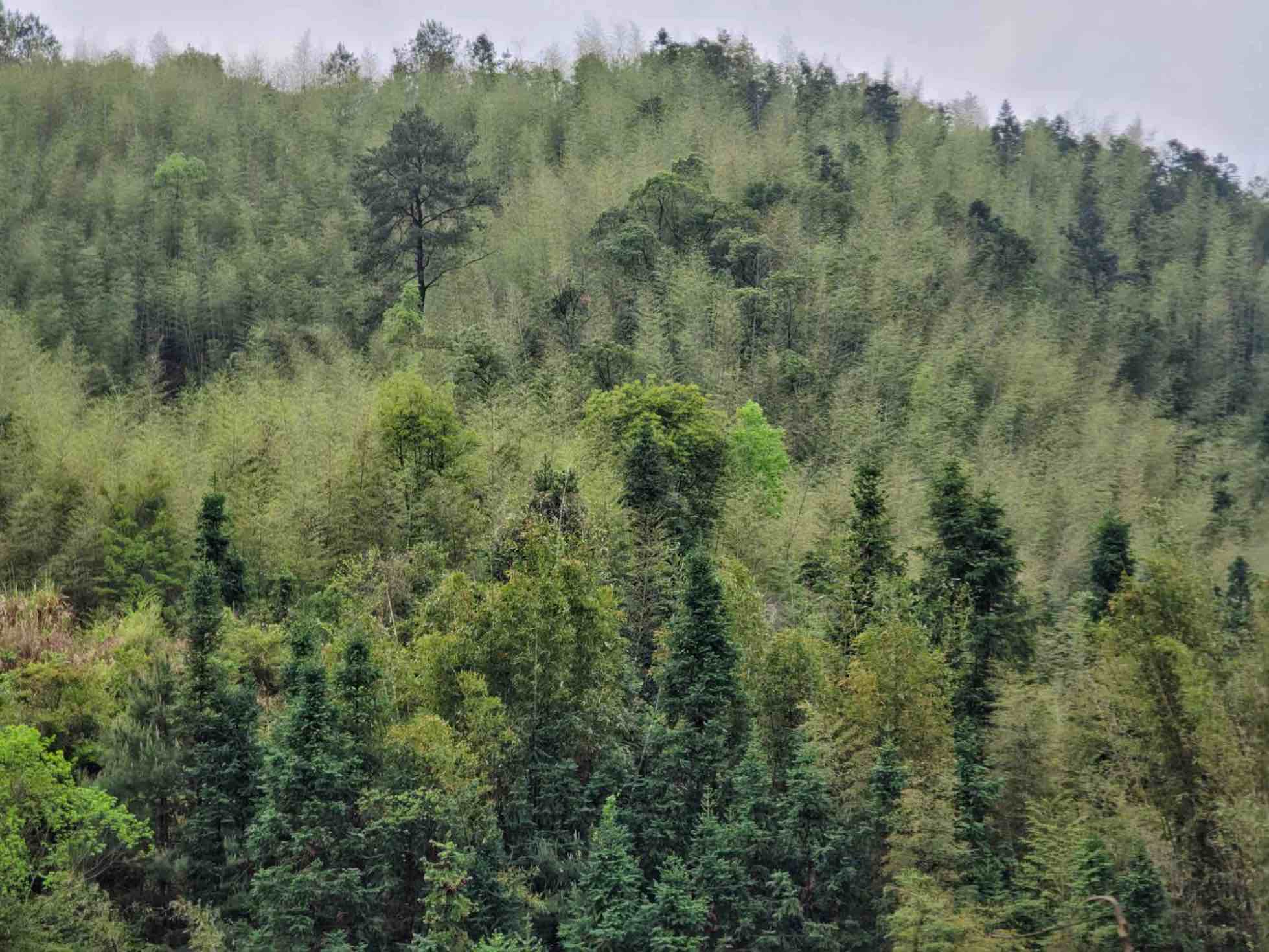
Recently, in the East and South-West of China, I went to see the working systems that produce the ecological services we depend on. They look nothing like the factories in the industrial zones I passed by train and bus, yet in practice they follow the same operational logic. The inputs are degraded water, depleted soil, species decline, and carbon in the wrong place. The machinery is the whirring cogs of living matter. In one valley I looked out over a system that has run for centuries: mulberry grown on the dykes feeds the silkworms, silkworm waste feeds the fish, and the nutrient-rich pond silt is dug back onto the dykes to feed the mulberry again. A closed loop, no input bill, nothing leaving as waste. The output is a product line that is both vital and increasingly scarce: water filtration, air cleansing, flood buffering, fire resilience, and pollination. These are not amenities. They are the production base of the economy. Without them, the activity humming inside the multi-coloured edifices of consumption that sit uneasily across the landscape, and the wider economy they belong to, would grind to a halt.
We keep trying to fund and expand the production base of these natural powerhouses by inventing financial instruments and asking nature to fit them. Credits, offsets, and contribution claims are put forward as the thing to build on. The instrument comes first, and the living system is bent into its shape. That gets the order backwards, largely because of a confusion between two quite different things that are both commonly called capital.
In an economic sense, capital is a means of production: the stock that makes real, useful things. Natural capital is capital in exactly this way. A wetland, a forest, and a healthy soil profile all produce outputs we cannot manufacture at any reasonable cost. Financial capital is something else. It is a claim on production, a way of coordinating and pricing it. Both are real and both matter, but they are not the same kind of thing, and the error running through much of the environmental markets conversation is treating the claim as the primary object and the production it rests on as an afterthought. We design the instruments, registries and incentives, then go looking for the natural elements best suited to fit within them.
Starting from the other end changes the questions. If nature is productive infrastructure, the task is not to financialise it but to pay for production we already rely on and currently take for free. Infrastructure is never funded through a single instrument. Roads, grids, and water systems are paid for through layered capital: public investment, concessional finance, and private capital, each carrying a different risk and rate of return. Layering is also how any uncertainty gets carried. Predictable, policy-backed obligations sit at the senior end. Variable, harder-to-forecast returns sit at the junior end, priced by those willing to hold them. A single instrument has to absorb all of it at once, which is one reason it keeps failing to price living systems. There is no good reason a wetland's flood protection, its water quality service and its carbon should be funded by one instrument when they serve different payers with different needs and different tolerances for risk.
There is a catch, of course, and as always it is the hardest part to resolve. This type of factory does not run on a straightforward, conveyor-belt production line. Living systems are non-linear, heterogeneous, and emergent. They diverge, converge and reorganise in ways that resist a fixed schedule. The machinery we use to move money is the opposite. Measurement, accounting, assurance, law and finance are procedural and standardised by design. They need stable categories and repeatable units. Force the living system to behave like a balance sheet and you either kill what makes it work or you produce numbers that are precise and mean nothing at the same time.
The resolution is not to make nature follow a more predictable path. It is to put a shared evidence layer between the living system and the procedural world: a standardised repository of verified outputs that messy reality feeds into, and that finance, compliance and reporting can each draw from. The layer does not make nature predictable. It makes the uncertainty legible, which is a different and more honest thing, and legible uncertainty is something a market can actually price.
This shared layer is governed, not neutral, and that distinction matters. It makes choices about decision usefulness based on context, on what counts as verified, to what standard and how often it is tested, and it makes them once and in the open, against a published rulebook that every method and instrument is held to alike. What it does not do is pick winners. It is method-agnostic by design: competing approaches can measure the same parcel and are judged against the same conformance tests, not against one another. Being conformance-driven and being method-agnostic are not in tension; the first is what makes the second credible. And the layer is only ever as trustworthy as the institution that keeps it, which is why this is finally a question of governance rather than technology. It gives every legitimate claim on that production the same reference point.
This is the difference between financialising nature and treating nature as infrastructure. One bends the living system to fit the instrument. The other builds the connectivity that lets instruments serve the system.
These factories are running and have been for a very long time, working fine without us. Everything we have built sits on top of what they already make. The interest in paying for that work is real and growing, so demand is not the binding constraint. What is missing is the connective tissue between the living system and the institutions meant to pay for it: a shared evidential layer that lets a payment attach to verified production rather than to a promise, whether that payment comes from a buyer who chooses to make it or a payer required to. The layer does not stand alone. It needs a rule behind it to enforce, just as any rule needs a way to measure whether it has been met. That enforcing half is the better understood one. The evidential layer is the half still missing at scale, and it is what lets us see the production, trust it and pay for it before we lose it. Without it, the willing pay for a promise and the obliged are billed for one.
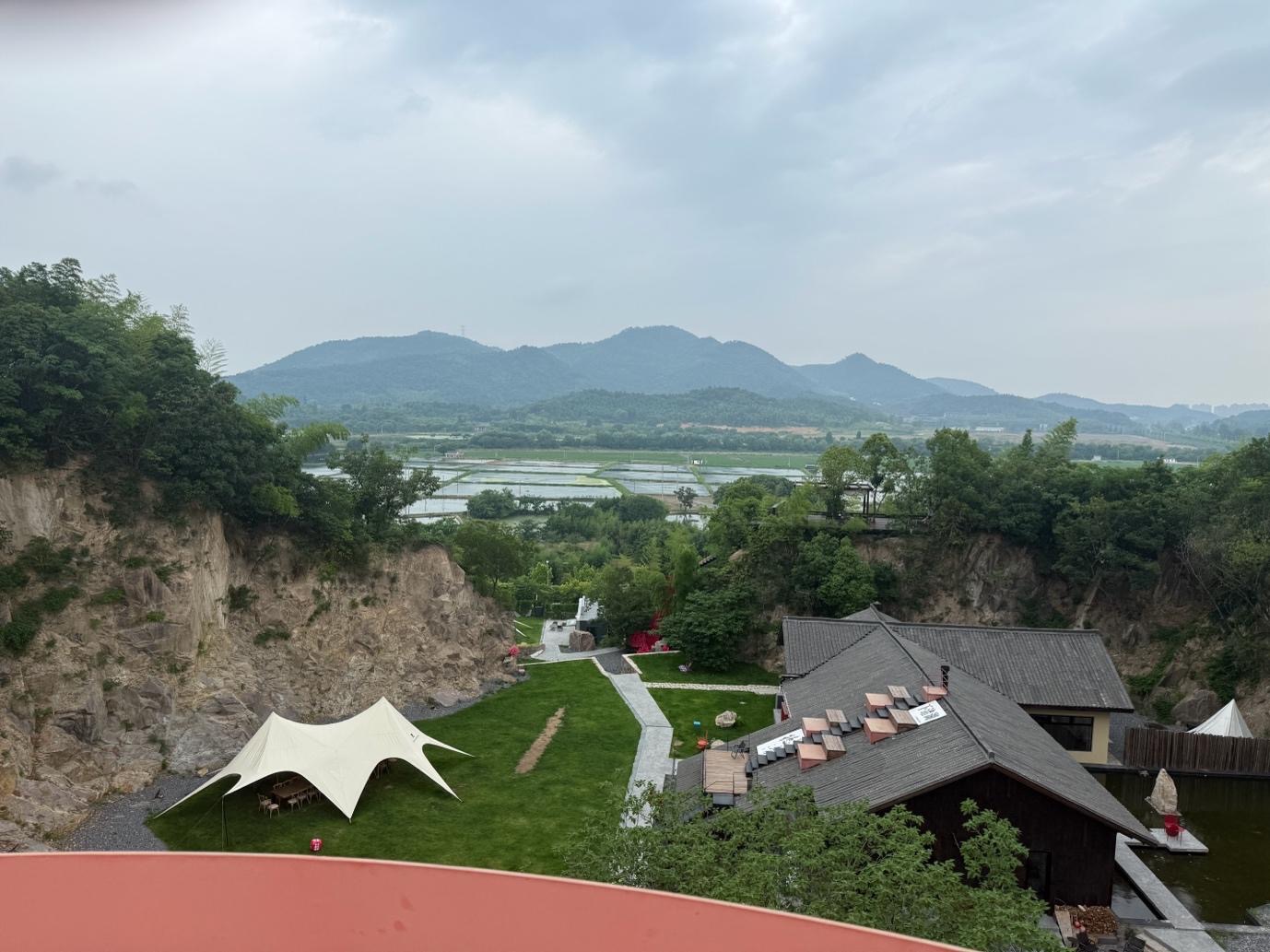
A working valley in eastern China. Productive land in the distance, a disused quarry in the foreground given a second life as a café.
This piece has stayed general on purpose, because the problem it describes is not specific to any one place. The thinking behind it draws on current work on nature market infrastructure in China, where the gap between verified ecological production and the institutions meant to pay for it is being worked through in practice rather than in theory. There is more to say on how that is being done, which will be fleshed out in future articles.
%201.svg)